Preface
The “middle-income trap” is originally a term from the field of development economics. It means that after a country’s economy reaches a middle-income level, the original growth model gradually loses its effectiveness, economic growth slows down over the long term, and it becomes difficult to continue advancing toward high-income status.
During the leap from the low-income stage to the middle-income stage, wages rise, but with that comes increased labor costs, and the low-end manufacturing and resource advantages that were previously relied upon no longer exist. To reach the high-income stage, one needs to rely on technological innovation and industrial upgrading to replace the original labor collective and achieve transformation. If a country cannot complete this transformation at the middle-income stage, it may fall into what is called the middle-income trap.
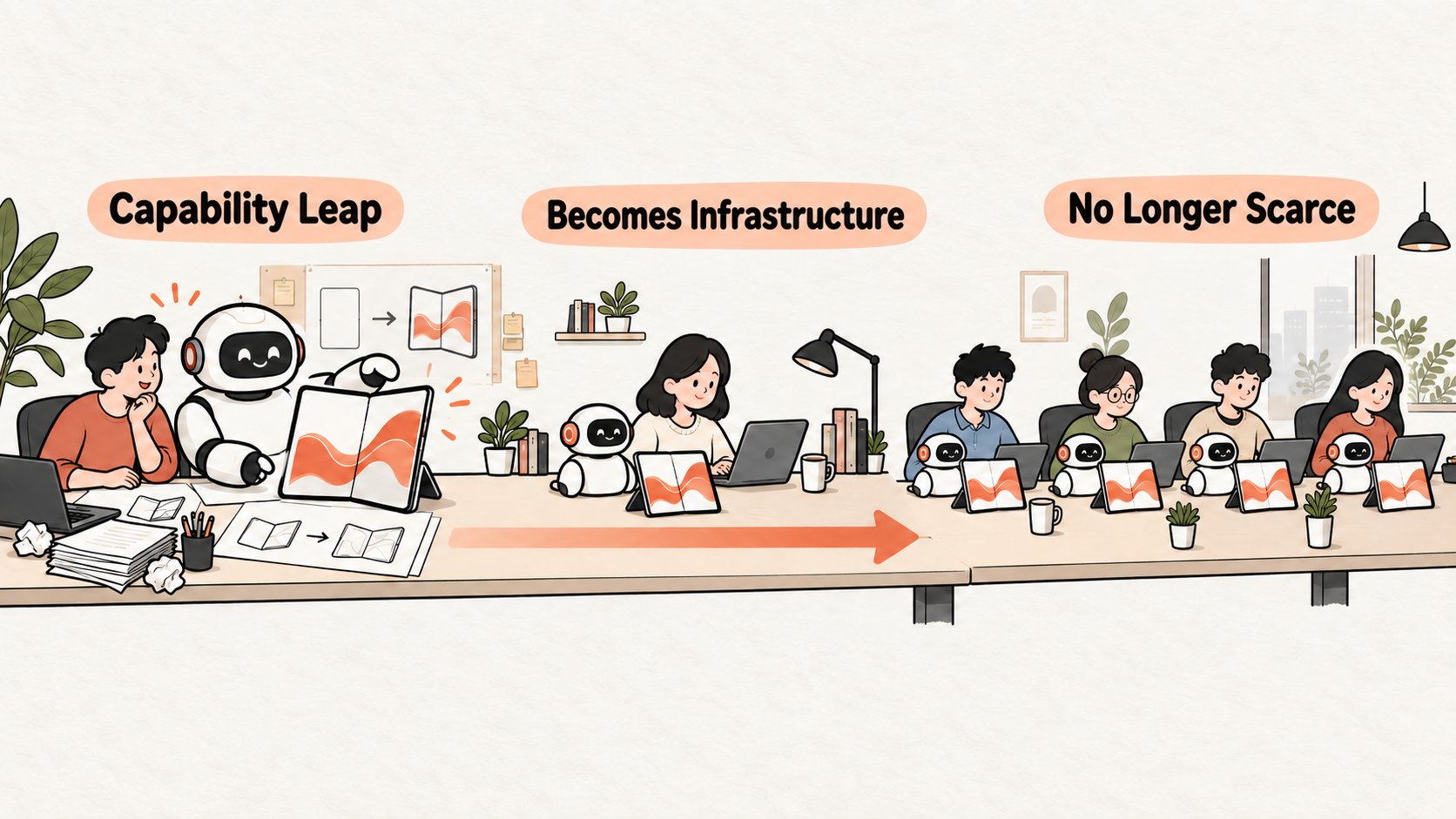
The development of AI Agents can perhaps also be compared to these three stages. In the early stage of development, people discovered that using AI Agents allowed them to accomplish tasks that were previously difficult, rapidly gaining productivity they never had before. However, AI has already become the infrastructure of workflows. While Agents expand the boundaries of capability, the price of models with equivalent intelligence drops; with the proliferation of office Agents like WorkBuddy, information gaps are gradually disappearing, and knowing how to use AI is no longer a scarce skill.
Ask yourself a question: If everyone could use Agents now, and all SOTA models were completely free, would you be confident in standing out from other users?
This question may seem like just a thought experiment, but it can be expected that we are accelerating toward this state of affairs.
I asked myself. Honestly, I don’t have much confidence. But fortunately, we still have the opportunity to take advantage of the dividend period brought by this information gap to try to build the capabilities that will allow us to stand out in the future.
AI’s Catch-up Effect
In 2023, I finished my college entrance examination (Gaokao). After entering university, I chose computer science out of interest. Looking back now, it’s still hard to judge whether it was a “right” decision. ChatGPT launched at the end of 2022, and in the fall semester of 2023, while I was studying Advanced Programming Language Design (C++), GitHub Copilot appeared. That way of continuously completing code by pressing Tab inline directly devalued my experience in this area. I witnessed with my own eyes the C++ language I had spent effort learning, while classmates who mindlessly used Tab could also type out code that passed evaluation.
At the time, I was secretly laughing at those classmates who lazily used AI to submit assignments, thinking they hadn’t learned real skills. Of course, now I can’t laugh anymore, because I discovered that the ICPC programming competition I invested a lot of effort into learning in 2024, practicing all kinds of competition-oriented techniques, could be easily torn apart by Claude in 2025; in 2024 I was still hand-crafting PPTs with templates, and in 2026 I could even directly let text-to-image models “produce the video in one click”; in 2024 I was still using Cursor to complete tasks that required me to watch over and guide them, and in 2026 those tasks could easily be autonomously implemented by an Agent with just “one sentence” from an ordinary user, complete with multi-dimensional testing, approaching the level of being ready for direct deployment.
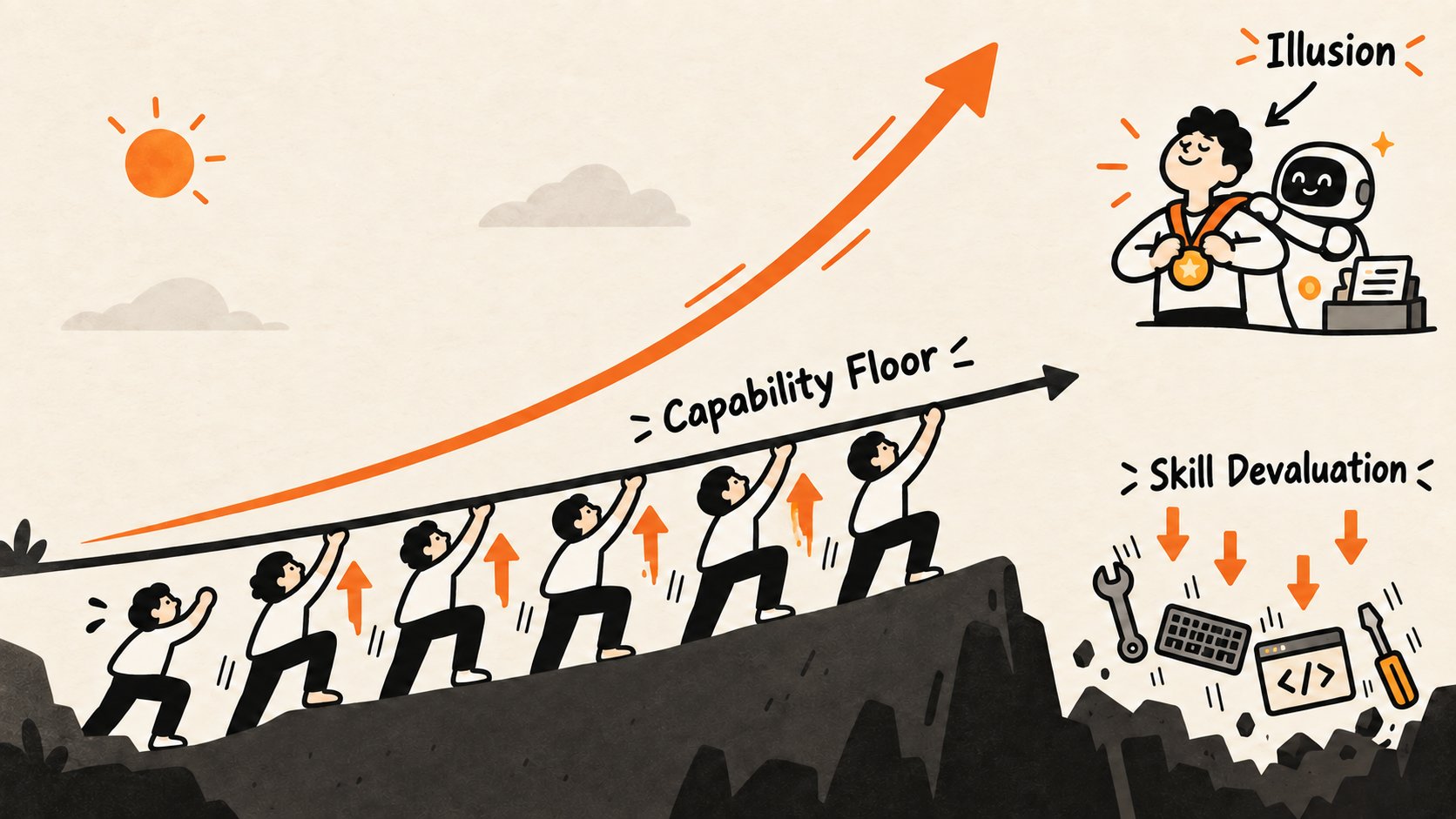
If a layperson’s level of understanding in a field is 5 points (out of 100), then AI might now be able to reach a level of 60 points without guidance, and this score might become 65 or 70 next month, while an individual human’s improvement in these scores might require years of practical experience to accumulate. The lower bound of ordinary people’s capabilities is being rapidly raised by Agents.
If a person only possesses such technical skills, they have no chance of winning. In the future, no matter who it is, using the most plain, most straightforward, most layman-like language, AI will be able to do it well. Most technical skills will continue to depreciate as Agent capabilities generally improve.
At the same time, from the model side, models with equivalent intelligence will continue to depreciate in the future, so achieving what we want will become increasingly cheaper. From an industry perspective, many things are still done by humans rather than AI because the cost accounting doesn’t add up; but once the cost of using Agents continues to drop to a critical point, the stages that still rely on human labor will be passively exposed to the risk of being replaced.
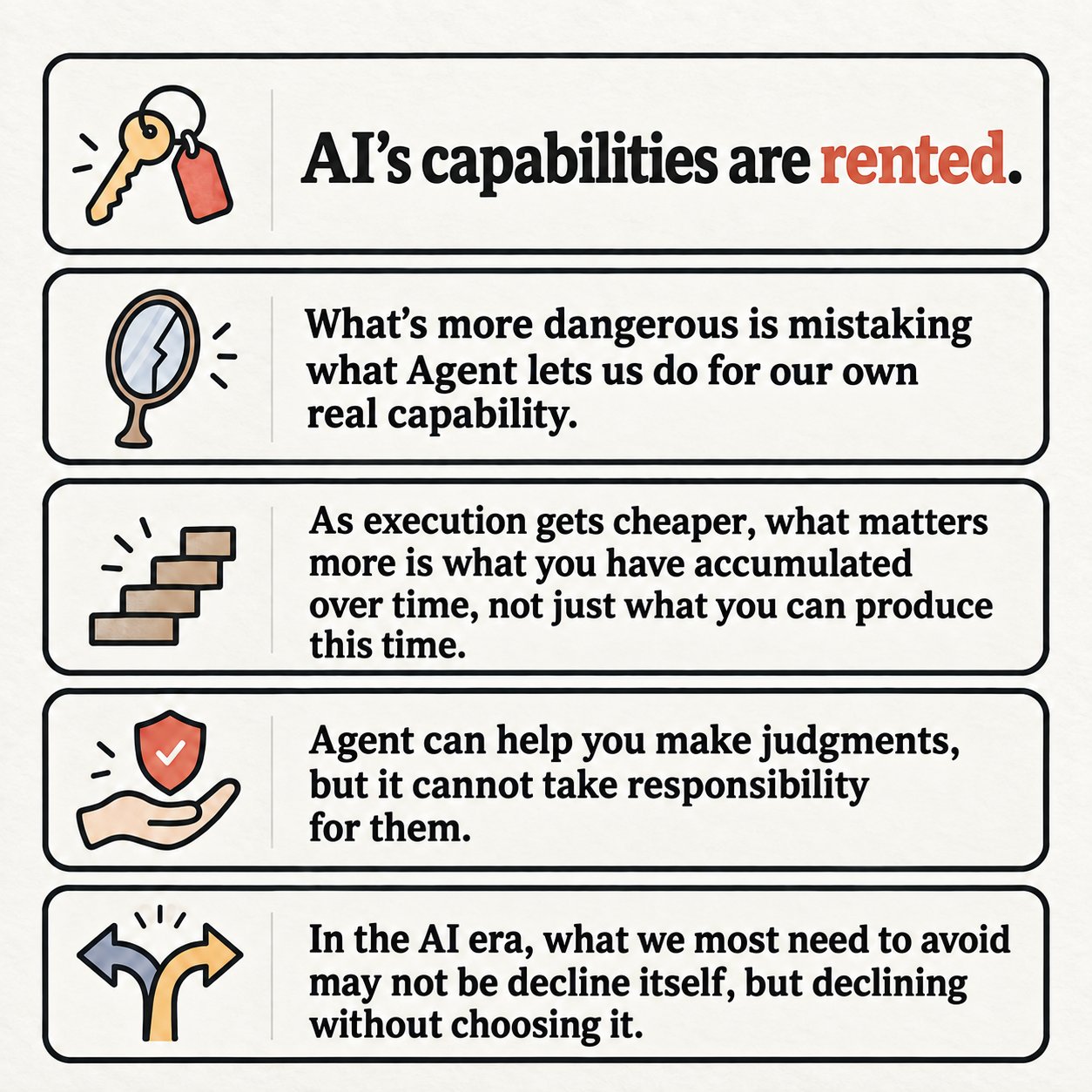
What’s more dangerous may be that we don’t even realize this, mistakenly treating what we can drive Agents to do as our actual abilities.
AI’s Middle-Income Trap
Many people now spend dozens or even hundreds of dollars a month subscribing to various AI memberships, making some self-amusing products. When you ask them how many actual users they have and how much money they’ve made, you find out it might be zero (yes, that’s me). To put it bluntly, such behavior is not much different from buying AI usage paid courses or paid communities in 2023 and 2024.
Yes, you can now use various Agents to make a decent-looking little toy with one sentence, or you can already improve efficiency in your workflow. But paying to subscribe to and use AI is not a sufficient condition for gaining capability improvement; instead, it can create the illusion that you are already ahead of many people and leveraging AI for efficiency. Indeed, we gain immediate improvements in efficiency and output, but we should also consider how to win this long race in the future, given the major trends of growing Agent capabilities, falling prices, and disappearing information gaps.
You might say, I’ve learned various prompt engineering techniques, I know how to install any number of popular Skills for Agents, and I know the pros and cons and speaking styles of mainstream LLMs inside out — aren’t these capabilities? Of course they are. But I prefer to split “knowing how to use AI” into two different types of capabilities.
One type is tool-bound skills. For example, what kind of prompt writing style a particular generation of models prefers, what Skill a particular Agent should have installed, or how a particular Harness needs to be tuned. These capabilities can indeed bring advantages in the present, but they largely depend on the tools themselves not yet being mature enough, and on information gaps still existing among users.
As long as a type of tool is useful enough, people will rush to make it simpler: foundation model vendors will make models better at correctly understanding intent, Harnesses will encapsulate complex configurations and technical details, and self-media, communities, and even course sellers will continuously spread best practices. While pursuing their own interests, they are also gradually turning the skills that required experts to master yesterday into the default out-of-the-box capabilities of ordinary users tomorrow.
The other type is closer to cognitive and judgment-based capabilities. Whether you know what the real problem is, which context must be given to the Agent, what kind of result counts as good, and when to trust or overturn its answers. On the surface, these capabilities also appear as “knowing how to use AI,” but they don’t primarily depend on any particular generation of Agent. On the contrary, the stronger the Agent, the more these judgments are likely to be amplified.
Therefore, if our advantage mainly comes from being more skilled with the tools themselves than others, then as models, Harnesses, and the general public’s usage experience all improve together, this advantage naturally faces continuous depreciation pressure. We need to gradually shift our competitiveness from “how to use AI better” to “knowing how to make decisions” and “knowing what is good.”
What Else Can We Do
AI capabilities are rented. What is truly worth accumulating is capital that does not depreciate along with falling model prices.
Capital can exist in the external world, i.e., “external capital”; it can also be accumulated within ourselves, i.e., “internal capital.” External capital is easier to understand — it existed before Agents appeared. It can be a group of core users who truly understand, use, and are willing to give feedback; it can be a social media account with a high follower count; or it can be a workflow that can be continuously iterated.
Compounding is an important characteristic of capital. Past accumulation continuously lowers the cost of the next growth. When execution capability becomes increasingly cheap, what matters more is what you have “accumulated” in the past, not just what you can “produce” this time.
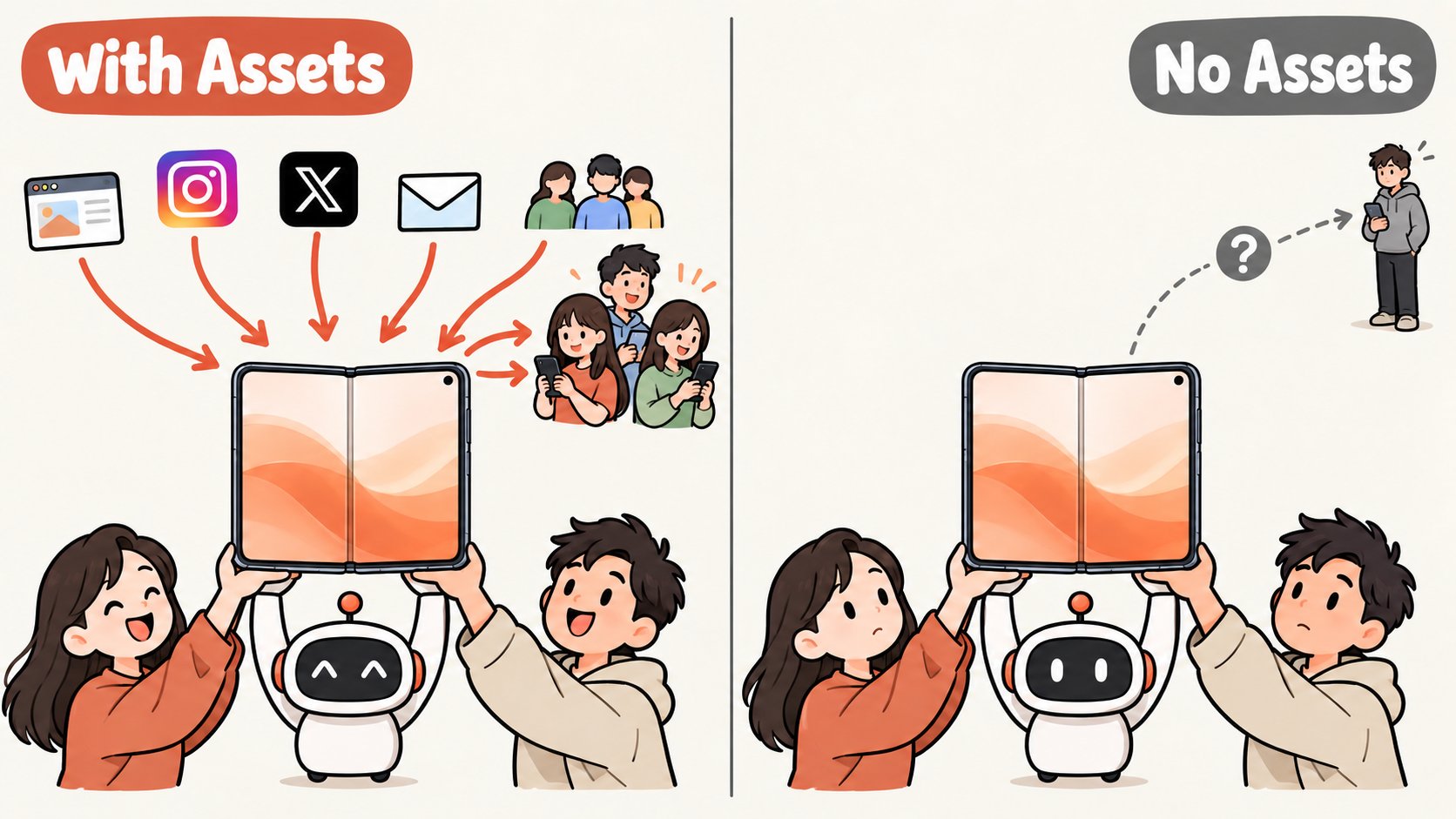
Two people can both have an Agent make a new product in one day. After finishing, one person still has to search for users anew; the other already has a group of users, a long-term managed account, and brand recognition accumulated from past products. AI has brought the two people’s “production capabilities” closer together, but it has not erased the gap formed by past accumulation.
After Apple recently released iPhone Duo, that screen transition effect accompanying the folding action was quickly ported by developers to devices like MacBook. In a short time, the community could produce visually similar products, but “making it” does not equal “people using it.” Apple can leverage global device users, operating systems, distribution channels, and brand recognition to deliver a new experience directly to a large number of users; even if an independent developer achieves a similar effect, they can usually only reach the few users they can access. What is truly difficult for AI to erase between the two is precisely this gap in external capital.
External capital is certainly important, but it mostly answers “what position you occupy on the world map.” There is another type of capital hidden within ourselves that determines how much result we can leverage on the lever of external capital.
Where Does Human Scarcity Lie
The preceding discussion mainly explored external capital. In the long run, we have to answer another question: in the process of human-Agent collaboration, where does our scarcity lie?
Besides external capital, there is another type of capital that is more easily overlooked when using Agents: internal capital. As Agents iterate, the things that only humans can do, or can do better, will become fewer and fewer. In the future, most of humanity’s productivity capabilities will depreciate in comparison, but there are still some capabilities that are not easily depreciated:
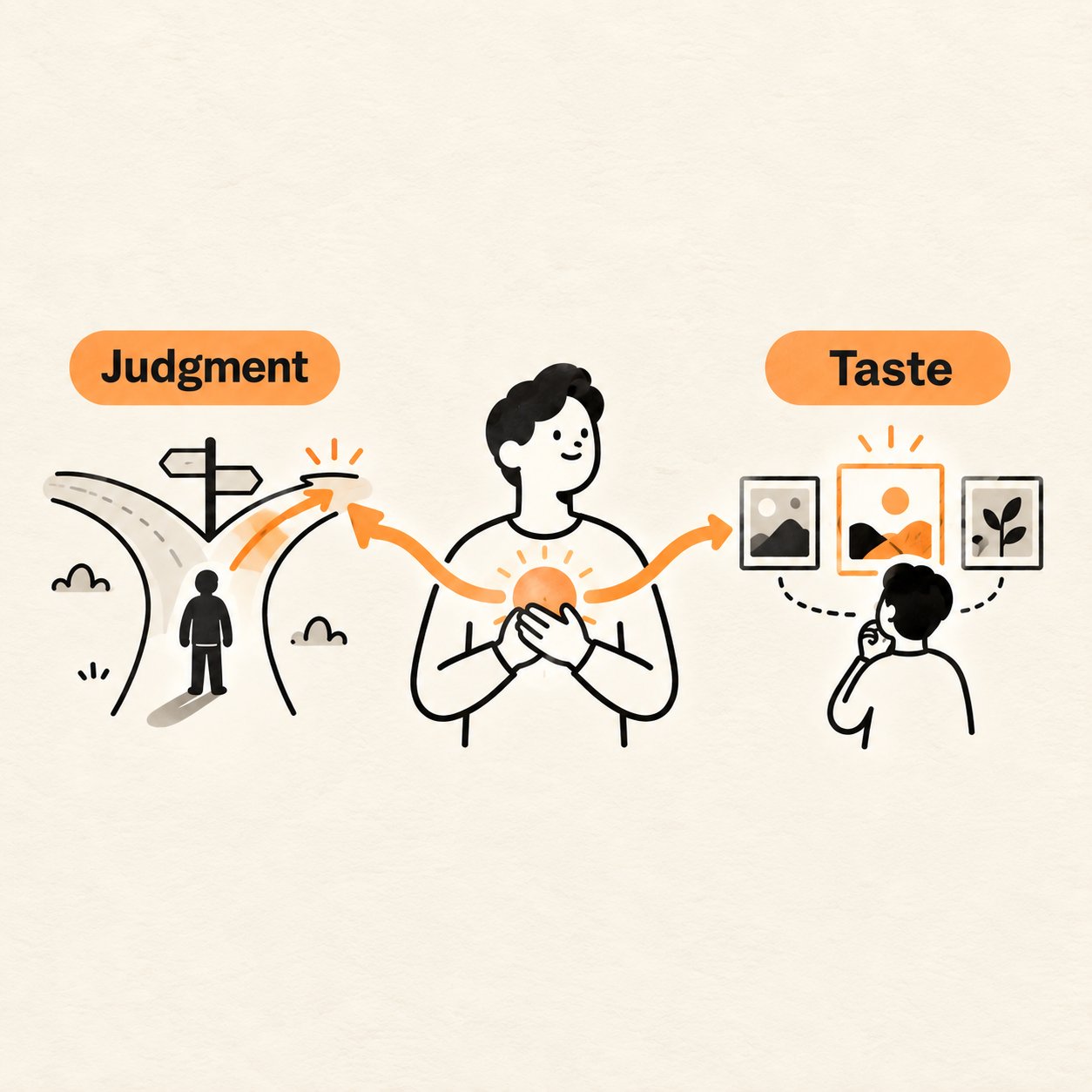
- Judgment that has real impact on the world. An Agent can certainly help you make judgments, but unfortunately, it cannot take responsibility for your judgments — there is an asymmetry of power and responsibility. If an Agent messes things up, besides sincerely apologizing to you and giving you some psychological comfort, it can’t do anything else.
- Taste that serves people. For example, when making a product whose ultimate users are real humans, although an Agent can try its best to conform to human taste based on accumulated experience, whether the result is ultimately good or not is still decided by humans. An ordinary user might be able to roughly say whether a design is good or bad based on experience, but would find it difficult to analyze the reasons for a design’s shortcomings, and might not necessarily be able to give targeted improvement suggestions.
How to Improve Taste and Judgment
Taste can be understood as “what is good,” while judgment is closer to “how to make decisions in a specific situation.” Although the two often appear together, they are cultivated in different ways. Judgment relies more on real decisions, result feedback, and repeated calibration; taste is closer to a long-term internal evaluation standard, which requires gradually building a perception of “what is better” through extensive exposure to and comparison of different objects.
From a long-term compounding perspective, we should pursue methods of continuously cultivating and updating our taste and judgment in the process of collaborating with Agents.
Judgment
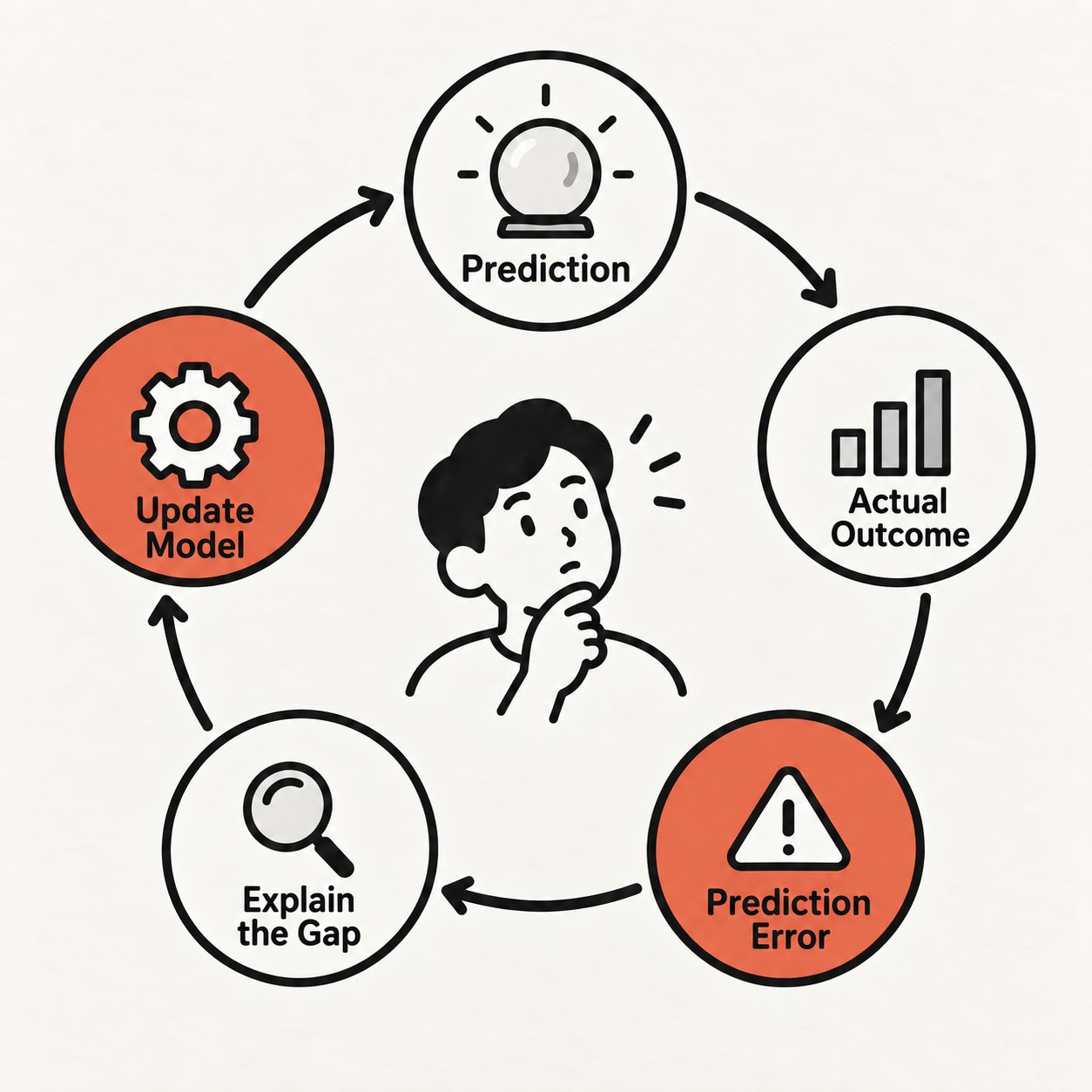
Cognitive science research shows that the brain uses the difference between actual outcomes and prior expectations as an important learning signal, and receiving feedback after forming predictions is also more conducive to discovering and correcting biases in original judgments. Therefore, the cultivation of judgment can be roughly understood as a continuous loop: prediction → actual outcome → prediction error → explaining the error → updating the model. The updated model enters the next round of prediction, so “new prediction” need not be listed separately. This “prediction-error-update” structure can also be seen in similar forms in machine learning methods such as reinforcement learning.
In daily usage, there is a common state: you encounter a problem that is hard to judge, directly hand it to the Agent without thinking, let it give you an answer, and then you directly accept this seemingly reasonable answer. You seem to have learned something, but in this loop, there are no “outliers,” so you cannot continuously update your judgment. This is actually the typical situation of the “middle-income trap” described earlier. You pay a high subscription fee, let the smartest Agent work for you, and you do get the level of output the Agent should deliver.
Pay money, get things done — you really haven’t lost anything. But you’ve wasted the opportunity to cultivate your own judgment. That is to say, after a few months, the Agent’s capabilities have advanced by leaps and bounds, and you can indeed do more things with it, but your judgment hasn’t improved much, and you will become even more dependent on Agents to do things. What’s worse, those who originally had less usage time than you are closing the gap with you more and more, for the reasons described earlier. Like a frog being slowly boiled in warm water, your irreplaceability is gradually dying.
So how do we improve our judgment? Honestly, I don’t have much practical experience yet, and I’m still soaking in the warm water myself. Below are the directions I plan to try in the next phase:
- Add a prediction step. Before asking the Agent for its opinion, give your own judgment, even if it’s immature, and verify it through discussion with the Agent or through actual results. Only this way can the loop be closed.
- Deliberately seek evidence that could overturn existing judgments. When discussing with an Agent, neither side is necessarily correct. We should prioritize seeking real, verifiable feedback from reality and attribute it to the current judgment as much as possible, thereby verifying whether our judgment is valid.
- Turn “I was wrong” into “why was I wrong.” For a capability like judgment that needs to transfer to new situations, merely remembering “what the correct answer was this time” is not enough. What matters more is understanding why you were wrong and generalizing this “outlier” into a model or principle that can transfer to future judgments.
Taste
Unlike the cultivation of judgment, the cultivation of taste focuses more on “comparison.”
Stepping outside the Vibe Coder perspective, I went to reference the views of product designers and art creators.
Product designer Iglika believes that taste often doesn’t come from rigid tutorials, but from long-term personal exposure to a large number of good products, until you “develop an eye for it.” Fey’s co-founder and designer Thiago Costa says that he absorbs excellent design extensively from cross-disciplinary fields such as art, architecture, film, and games, rather than only looking at other works within his own field.
Only after we acknowledge that designs have differences in quality can we naturally begin to deeply study what makes a good design good.
Another consensus is that just looking and comparing is not enough; you also need to actually create. And as Vibe Coders, we can use the tools we’re familiar with to take advantage of the Agent-era dividend, producing comparison groups at scale and low cost.
Next time you’re considering a design, instead of asking the Agent “which one is best,” you can have it design multiple candidates in different directions, and compare and analyze them from a user’s perspective. In addition, you can also compare with the designs of other products. In this process, we not only move away from the “take whatever the Agent gives you” approach to design, avoiding the reverse blame that the Agent “can’t design,” but we also cultivate and exercise our own taste along the way.
Less Is More
Human attention resources are limited. We cannot simultaneously raise our taste and judgment in every area of work and life. We must make trade-offs and allocate limited attention to the places with the highest long-term marginal returns.
You have to give up something to gain something. How do we judge which internal capital is worth pursuing and which can be appropriately abandoned? I think we can consider it comprehensively from the following dimensions:
- Importance. The degree of relevance between judgment and taste and the fields you care about, especially paying attention to whether it is the current “bottleneck.”
- Long-term return on investment. Consider the Agent’s current level and rate of progress in that field, as well as the level of mastery among peers.
- Transferability. Whether the internal capital invested in can be trained across tasks in different fields and repeatedly amplify its value.
Regarding the second point, we need to note a basic conclusion: an Agent’s ability to improve in a field far exceeds that of any single individual. Therefore, for fields where Agents already do better than you — for example, if its average level of image generation is better than yours — we can consider proactively “regressing,” accepting the average level that Agents can achieve, and allocating our limited attention to other more important capabilities.
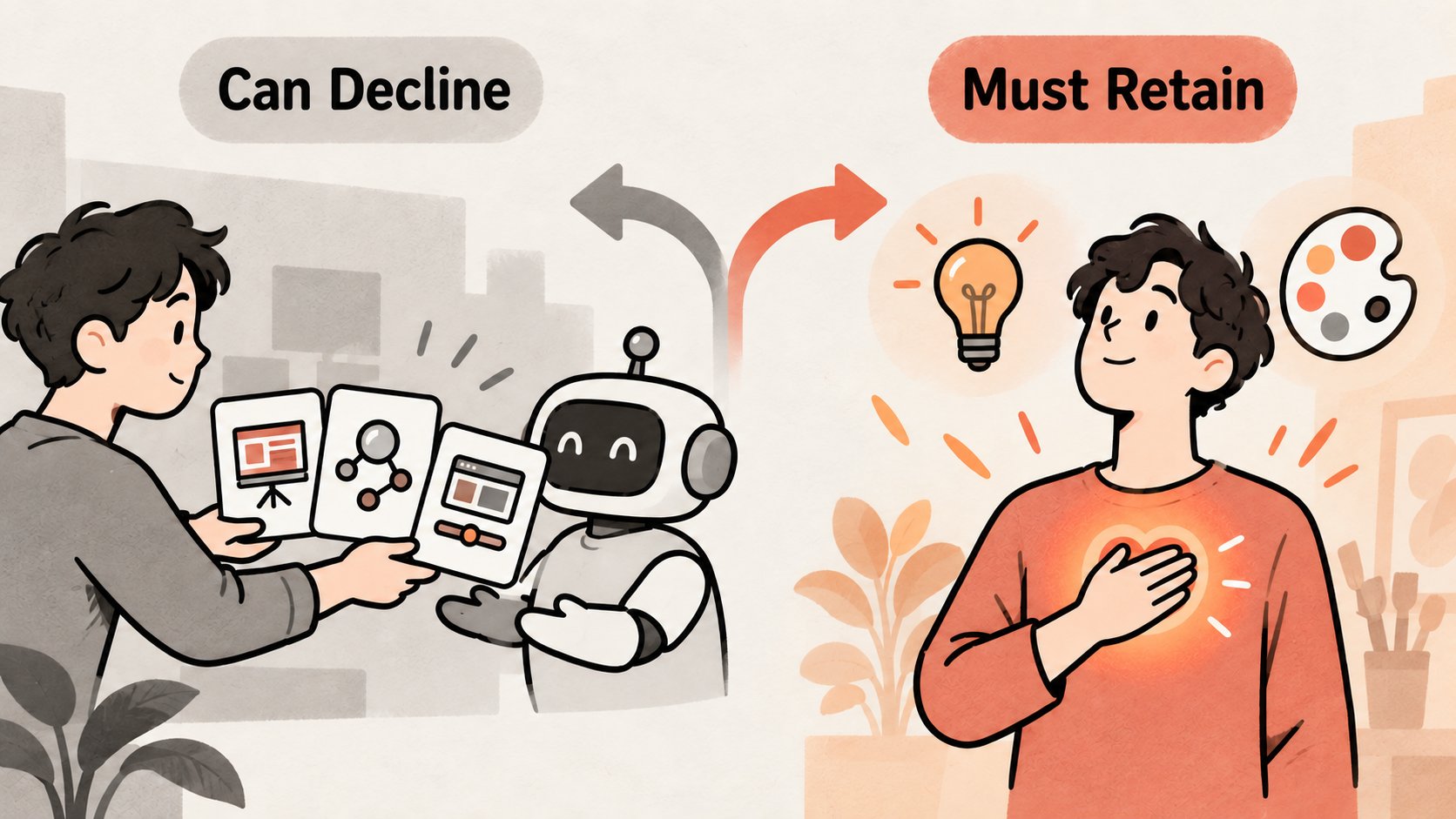
What truly needs to be avoided in the AI era is not necessarily capability regression, but regression without choice. Some capability regression is completely fine. Previously I looked up API myself, tweaked CSS, and hand-crafted PPT; now handing these to Agents is itself a dividend brought by technological progress. But if the cultivation of internal capital like taste and judgment is also unknowingly abandoned along the way, that is what truly deserves vigilance.
Conclusion
The arrival of the Agent era is undoubtedly reshaping our workflows. I suddenly realized that the Agent’s “middle-income trap” is dragging me into a swamp of mediocrity and making me more dependent on them.
After realizing this, how should I fight against it? I’m not a person who can “persevere.” For me, a better way is to design a mechanism — a mechanism that allows my human nature to submit to it and guides me onto the right path.
As the philosophy conveyed in the book Antifragile suggests, a good mechanism can even help me turn the dividends of the Agent era to my advantage in reverse. By reshaping the way I interact with Agents, proactively creating my own judgments, “outliers,” and comparison objects, and continuously accumulating my taste and judgment on the basis of better grasping project states and achieving better results, perhaps I’ll have a better chance of winning the long race.
Due to space limitations, some related thoughts in this article have not been organized yet and will be published separately later. Stay tuned.